
New Delhi [India], June 18: AI video creation is moving fast. What felt impressive a year ago—typing a prompt and getting a usable clip—now feels like the starting point. Brands, creators, and marketers want more control, more consistency, and better output without adding hours of editing work.
That shift is exactly why reference to video AI is gaining attention. Instead of relying only on text prompts or few images, this new approach uses a reference image, style, subject, or visual cue to guide the final video result.
Why AI Video Creation Needed a Next Step
Text-to-video tools opened the door to a new kind of content production. They made it possible to turn ideas into motion quickly, often with minimal technical skill. But for many users, there was still a gap between imagination and output.
A text prompt can only do so much. Words are flexible, but they are also vague. If you want a video to match a specific product look, character style, brand tone, or scene composition, describing every detail in text can be frustrating. Even then, the result may not be consistent.
Reference to video AI changes the game. By giving the model a visual reference to follow, users can guide the style, subject, framing, or mood much more precisely. Instead of asking AI to guess what “clean luxury product aesthetic” means, you can show it.
This is why many people now see AI reference to video generation as the next logical step in the evolution of AI video tools.
What Is Reference to Video AI?
At its core, reference to video AI is a workflow where a user provides some kind of visual input—such as an image, frame, design, character, product photo, or style reference—and the AI uses that material to generate a video.
That reference can help shape:
● Character appearance
● Product consistency
● Visual style
● Scene composition
● Motion direction
● Color palette
● Brand aesthetics
This approach gives creators more control than pure text prompting. It also reduces one of the biggest pain points in AI video creation: unpredictability.
In practical terms, reference to video AI allows a creator to start with something concrete and turn it into motion, rather than starting from a blank prompt and hoping the result feels right.
Why This Matters for Marketers and Creators
The rise of short-form content has changed how video gets made. Teams need more assets, more often, and for more platforms. But speed alone is not enough. The content also has to look on-brand and feel intentional.
That is why reference based AI video generation is becoming so valuable.
Better Brand Consistency
Brands care deeply about visual identity. Colors, product angles, styling, and overall tone all matter. With a reference-led workflow, teams can keep those elements more consistent across multiple videos.
Faster Revisions
When the first result is closer to the target, less editing is needed. That shortens production cycles and helps marketers publish faster.
More Usable Output
Generic AI videos may look impressive, but not always practical. Reference-guided generation improves relevance, which makes the final content more useful for ads, product showcases, tutorials, and social posts.
Easier Creative Scaling
A single reference can be turned into multiple content variations. That makes it easier to create platform-specific assets without rebuilding each piece from scratch.
How Reference to Video AI Works in Real Use Cases
This technology is not just interesting in theory. It is already useful in a wide range of content workflows.
Product Marketing
E-commerce brands can use product photos as references to generate promotional videos that stay visually aligned with real inventory. This is especially useful for ads, landing pages, and marketplace content.
Character and Avatar Content
Creators who rely on recurring characters or digital presenters can use reference visuals to keep appearances more stable across videos.
Style Transfer for Social Media
A creator may want multiple videos to follow the same visual language. With reference to video AI tools, one image or frame can guide a whole series of posts.
Campaign Variations
Marketers can take one approved visual direction and quickly generate different edits for different audiences, offers, or channels.
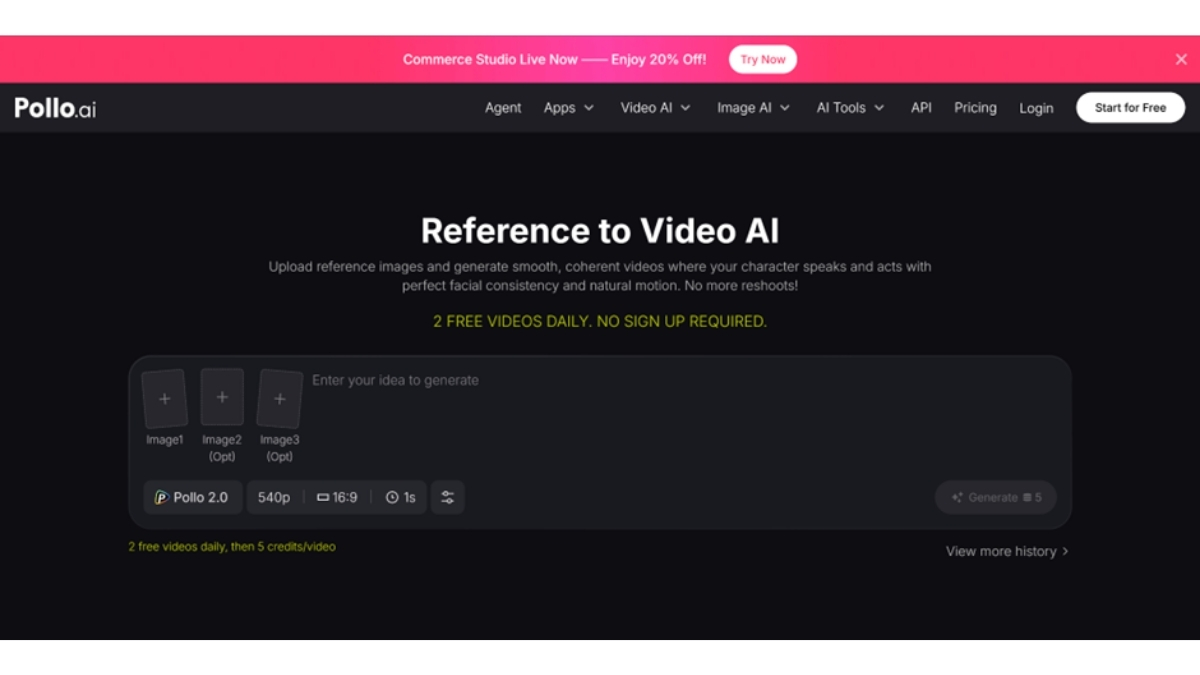
Pollo AI Makes This Workflow More Accessible
As more creators and marketers explore this space, usability becomes just as important as raw generation power. That is one reason tools like Pollo AI are worth watching. It offers a wide range of one-click video creation templates, which makes it easier to turn ideas into finished content quickly. For busy teams and creators, that matters.
Another practical advantage is that these ready-made templates can help produce videos that are easy to publish directly to social media. Whether you want to make a meme video, or copy a viral post on TikTok, Pollo AI can always let you create platform-friendly content with less friction.
For brands trying to keep up with content demand, that kind of workflow can save real time.
Why Reference-Led Video Feels More Practical
Prompt-only video generation is exciting because it lowers the barrier to entry. But in real production environments, control matters. Teams are not just making videos for fun. They are making them for campaigns, launches, conversions, and brand storytelling.
That means they need output that is:
● Repeatable
● Editable
● Visually aligned
● Platform-ready
● Fast to produce
This is exactly why reference image to AI video workflows feel more practical. They bridge the gap between creative freedom and production reliability.
Instead of endlessly rewriting prompts, users can anchor the AI with something visual. That often leads to less trial and error and a smoother path from concept to final asset.
What to Look for in a Reference to Video AI Tool
Not all tools will deliver the same experience. If you are evaluating options, look for features that support real-world production needs:
● Strong visual consistency
● Easy reference upload
● Fast rendering
● Multiple output styles
● Social-media-friendly formats
● Template-based workflows
● Simple editing and export options
The best reference to video AI platforms are not just technically impressive. They are built to help people create usable content quickly and consistently.
The Future of AI Video Creation Will Be More Guided
AI video generation is clearly moving toward more guided, controllable workflows. That is a good thing. It means the technology is becoming more useful, not just more flashy.
Reference to video AI represents that shift perfectly. It gives creators a better way to communicate intent, maintain consistency, and produce content that actually fits business and creative goals. As demand for video keeps rising, tools that combine speed with control will stand out.
In the next stage of AI video creation, the winners will not simply be the tools that generate the wildest clips. They will be the ones that help users create the right videos faster. And right now, reference-led workflows look like one of the clearest signs of where the industry is heading.
If you object to the content of this press release, please notify us at pr.error.rectification@gmail.com. We will respond and rectify the situation within 24 hours.
