


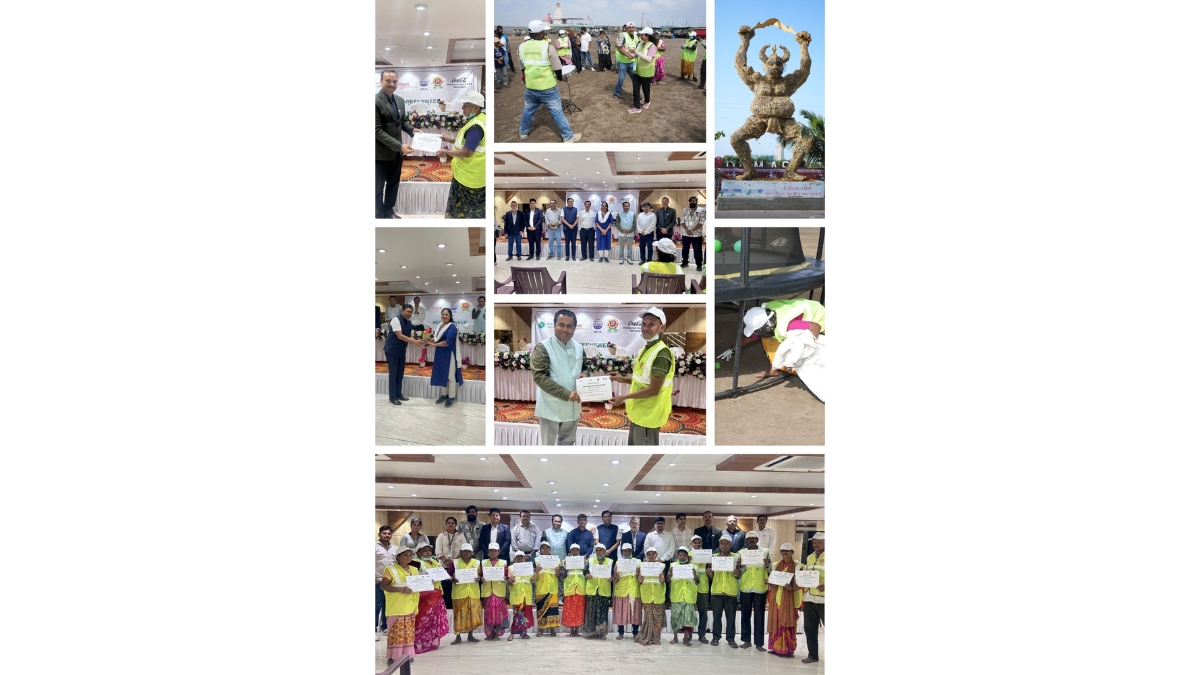
Surat (Gujarat) [India], May 6: The transition to a sustainable world requires more than corporate vision; it demands rigid frameworks and collective, on-ground action. On April 29, 2026, EPR compliance leader Nirmal Vasundhara brought this reality to life in Surat. By spearheading a mega beach and riverfront clean-up drive in collaboration with Hindustan Coca-Cola Beverages (HCCB), the organization orchestrated a powerful, live demonstration of India’s environmental regulations in action, uniting the four vital pillars of circularity—the Government, Corporates, Citizens, and Compliance Partners.
The Regulatory Engines: BRSR and EPR In India, the shift toward a sustainable economy is driven by two critical mandates. The Business Responsibility and Sustainability Reporting (BRSR) framework is the Government of India’s ESG mandate for the top 1,000 listed corporates, designed to hardwire sustainable, transparent behaviors into corporate DNA. Parallel to this is Extended Producer Responsibility (EPR), the statutory rule ensuring producers take physical and financial accountability for the recovery and recycling of their pre and post-consumer waste. The Surat drive was the very essence of these laws materialized into civic action.
Corporations Leading by Example: True sustainability happens when businesses view regulations not as a burden, but as a blueprint for impact. Organizations like HCCB exemplify this commitment. Through their active partnership backing of this mega drive, HCCB demonstrated the hard, on-ground work required to be genuinely sustainable, proving that well-compliant corporates are actively investing in the environmental health of their communities.
The Role of Government and Citizens. No framework can succeed without local enforcement and public participation. With steadfast guidance from the Gujarat Pollution Control Board (GPCB) and the Surat Municipal Corporation (SMC), local governance provided the necessary regulatory backing and infrastructure. Meanwhile, environmentally conscious citizens and frontline Safai Sathis acted as the crucial grassroots engine, proving that source-level waste segregation is the absolute bedrock of a circular economy.
Nirmal Vasundhara: Bridging the Gap. Navigating the complexities of BRSR and EPR requires deep expertise and operational muscle. This is where Nirmal Vasundhara steps in. Beyond facilitating physical circularity, the organization provides the strategic guidance required to align corporate actions with both national mandates and global ESG frameworks. Whether it is on-ground EPR execution, GHG accounting, or preparing for comprehensive global assessments like EcoVadis and CDP, Nirmal Vasundhara bridges the gap between policy and practice. During this event, they ensured complete circularity by channeling 100% of the collected plastic waste directly to their MRF Center for recycling.
From the Director’s Desk: “Environmental compliance requires verifiable, on-ground action. By uniting government, corporates, and citizens, we turn BRSR and EPR frameworks into real impact. Our mission is to ensure every sustainability commitment translates into complete circularity.”— Miklesh Goel, Managing Director
The Bottom Line: Achieving a circular economy cannot be done in silos. When the government establishes frameworks like BRSR and EPR, compliant corporates like HCCB fund the recovery, citizens segregate at the source, and partners like Nirmal Vasundhara provide the vital training and operational infrastructure, a zero-waste future transforms from a regulatory goal into a tangible reality.
